Command, combat and supply.
Lead troops into battle. Keep them supplied with fuel, ammunition and reinforcements.
ASH MERIDIAN is a military RTS that puts you in command of troops and the industrial rear. The first confrontation in development has the player lead the Soviet side against US forces controlled by General AI. Each operation defines available forces, capacity, stocks and obligations. Choose where to act, commit reserves, hold positions and organise withdrawals. The economy uses materials, labour, energy and transport without a currency.
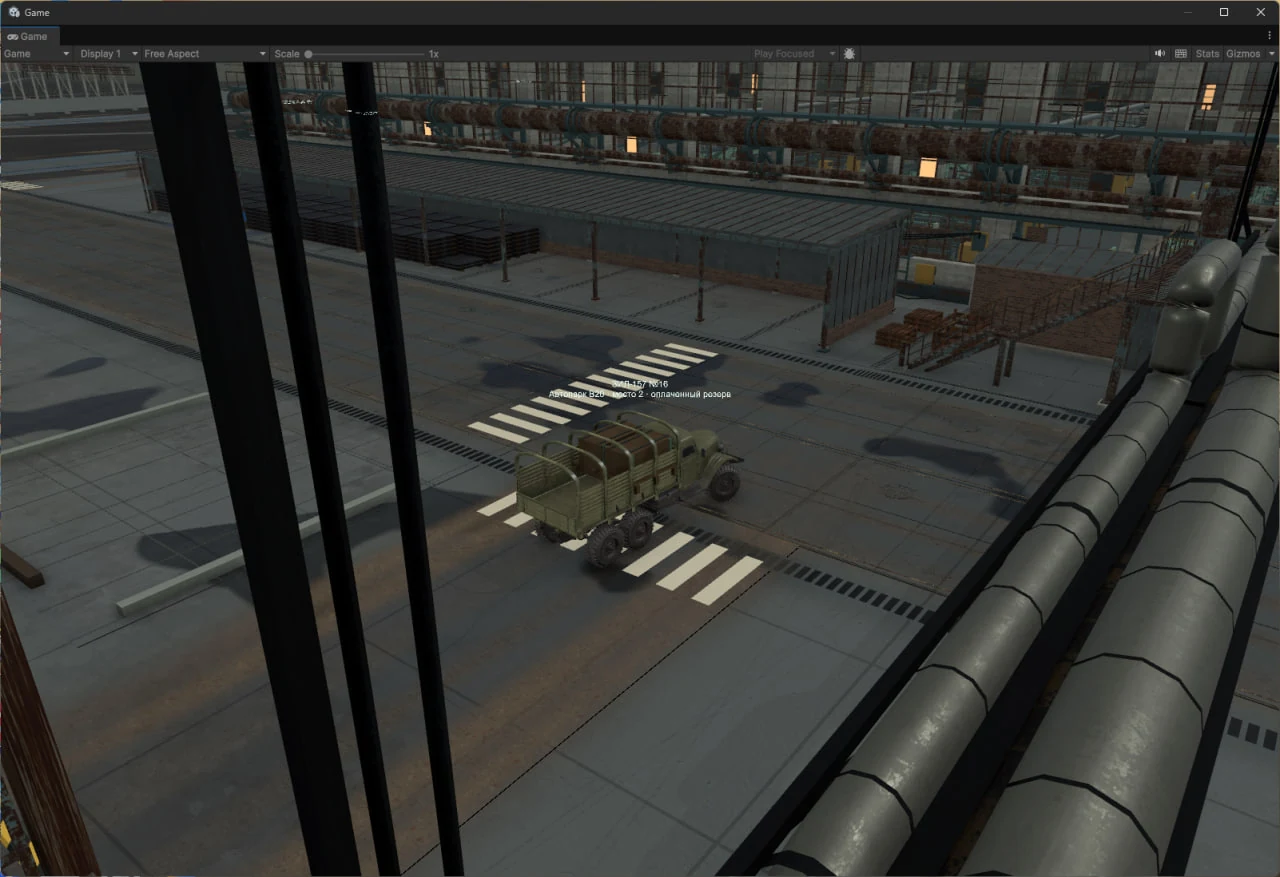
What you command in battle
The game design connects the tactical situation to the actual condition of your units. The enemy scouts, attacks positions and disrupts supply. Respond with manoeuvre, fire, reinforcements or withdrawal, using the forces you still have. Vehicles and people have no HP: damage changes specific components, conditions and available actions.
Troops and orders
Select units, movement directions and tasks. Check visibility, cover and available approaches; revise the order when the enemy blocks a route or a vehicle loses a required function.
The front and the reserve
Decide which sector receives vehicles, crews, fuel and ammunition first. Reinforcing a defence consumes forces that might be needed for the next attack.
Losses and recovery
A damaged vehicle may retain some capabilities. Decide whether to keep fighting, withdraw for repairs or cover a recovery. The condition of vehicles and the fate of people are tracked separately.
An economy serving the operation
The production programme answers a need at the front: a new vehicle, ammunition or a damaged machine restored to service. Materials, energy, labour and transport are finite. Your priorities decide which task receives them first and which must wait.
01Raw materials and supplies
- Requirements
- You need the right kind of material, its source and its destination. Stock exists at a particular place in the world; availability begins with the ability to obtain it.
- Your decision
- Identify the materials your production programme needs and prioritise their supply. Consider the source, transport and receiving together: the entire journey to the consumer matters.
- Execution
- Received material provides the basis for the next operation. You can trace a finished component back to its origin and understand which supply link supports its production.
- Failure & diagnosis
- When a required material is missing, the dependent stage stops. Find where the shortage arose: at the source, along the route or at receiving, then restore the necessary link.
02Energy
- Requirements
- An operating workshop needs energy and the ability to use it for the required operation. Having materials and people available does not complete the production requirements.
- Your decision
- Account for power supply when choosing a programme and its priorities. When capacity cannot support the work you want, reconsider the sequence of tasks and provide the necessary conditions.
- Execution
- A supplied operation can continue and pass its output to the next stage. Energy connects the capabilities of the infrastructure to the work the factory can carry out in the chosen order.
- Failure & diagnosis
- Loss of supply affects dependent work. First establish which operation has lost a required condition; then decide whether to restore power or change the immediate production priority.
03The production programme
- Requirements
- Production requires materials, functioning workshops, people and a sequence of operations. Assembly relies on earlier stages, and a completed product still needs preparation for dispatch.
- Your decision
- Specify what the factory should produce and which orders matter most. Automated production processes execute the programme; your role is to change priorities and resolve competing needs.
- Execution
- An order progresses through supply, assembly, readiness and dispatch. The player can understand where the result is in that journey and which condition is needed next.
- Failure & diagnosis
- A shortage stops a particular stage. Raising its priority cannot create a missing component: provide the supply or change the programme to reflect what is available.
From the factory to a combat-ready unit
A completed vehicle still needs a crew, fuel, ammunition, assignment to a unit and delivery to its task. The route connects the factory to the front and becomes a target for the enemy. The same requirements apply to the US side: the General’s orders must rely on its actual forces, production and deliveries.
04Storage and transport
- Requirements
- There is cargo, a point of departure, a receiving point and transport work between them. The consumer obtains material through delivery; stock in a distant warehouse remains part of that task.
- Your decision
- Set the direction of supply and the transport priority within the overall programme. Automated transport carries it out while you monitor waiting consumers and broken connections.
- Execution
- Cargo reaches receiving and becomes available where the next operation needs it. Transport movement therefore explains changes in stock and the readiness of production stages.
- Failure & diagnosis
- A delay or interrupted route calls for investigating the particular delivery. Establish where the cargo remains, then restore the connection or revise the supply plan using available means.
05People and crews
- Requirements
- Work requires people with the appropriate role, assignment and a route to their workplace. In the tested Soviet district, a shift journey passes through a stop, a bus, the factory gate and the workshop. The American district design gives private cars a larger role; the resident’s journey is still in development.
- Your decision
- Match assignments to production priorities and vehicle tasks. Check who provides each function and which work depends on that assignment before changing it.
- Execution
- Assigned people connect the production programme and vehicle actions to their operators. Readiness becomes clearer: someone is responsible for each task, and each crew has a particular vehicle.
- Failure & diagnosis
- When a required person is unavailable, the related function is unavailable too. Check what the vehicle or operation has lost and what remains possible, then address assignment or return.
06Vehicle readiness
- Requirements
- You need the vehicle functions required for the task, a crew, a place in a unit, fuel, ammunition and an available route. Factory readiness, delivery and combat readiness are separate states.
- Your decision
- Check the vehicle’s condition before dispatch. Match its available functions to the upcoming work and provide whatever is needed for the order to proceed.
- Execution
- A prepared vehicle leaves production ready for a task in the field. Readiness means specific capabilities: what it can do now and what supports those actions.
- Failure & diagnosis
- A missing component or supply limits the related functions. Resolve the specific cause or choose a task that fits this vehicle’s remaining capabilities. Then reassess its readiness for dispatch.
Combat, damage and return
Select forces and assess the situation on the map. An order depends on the enemy’s position, visibility, routes, fuel, ammunition and vehicle condition. The interface design groups commands in the panel on the right and uses warnings to explain the cause of a failure.
07Orders in the field
- Requirements
- An order needs a unit, an available capability and a clear objective. What you can ask it to do depends on its condition and the circumstances in which it must act.
- Your decision
- Select forces on the map and order movement, a stop, a hold or a withdrawal. Match the order to available approaches, visibility, supply and the operational objective. The right-hand panel keeps the selected unit’s controls available while you survey the terrain.
- Execution
- Your decision becomes a task assigned to a particular unit. Automated execution follows the priorities you set; observe the result and revise the task as the situation changes.
- Failure & diagnosis
- A blocked route, an empty fuel tank or a damaged module changes the available actions. A failed turret drive, for example, does not automatically stop the vehicle from moving. Choose a task it can still perform or withdraw it for restoration.
08Diagnostics and warnings
- Requirements
- A useful message links an object to a change in its capabilities. The central question is who was affected, which function was lost and what that object can still do.
- Your decision
- Open the object’s information card and identify what changed. Move the camera to the incident when you want a closer look; warnings leave you in control of the view.
- Execution
- You gain a basis for the next order: continue available work, reassign a task, restore supply or address damage. The warning helps you decide within the context of the whole chain.
- Failure & diagnosis
- A generic fault indicator is not enough to choose a response. If the cause is unclear, first identify the lost function and dependency; otherwise intervention may leave the stoppage unresolved.
09Recovery and repair
- Requirements
- There is a particular damaged vehicle, its surviving condition and the requirements for bringing it back. Restoration needs suitable work, people and materials; the decision starts with assessing what can be saved.
- Your decision
- Decide whether the required function can be restored in place or the vehicle needs recovery. Assign protection, people, materials and transport; weigh the recovery risk against the remaining forces’ objective. Usable parts may need a separate return journey.
- Execution
- The same object, or usable parts recovered from it, returns to the chain. Restoration continues the vehicle’s history and requires supply just as its original production did.
- Failure & diagnosis
- Damage can remove the ability to move independently or another required function. If restoration is not yet possible, identify what blocks recovery or repair and which resource is needed next.
Development within a technological lineage
Industrial development retains its connection to a vehicle’s origins. New knowledge belongs to a particular lineage; the condition of vehicles already produced remains a separate matter.
10Research and compatibility
- Requirements
- Each research direction belongs to a technology lineage: the vehicles and production it is developed for. Its value depends on compatibility with your production programme.
- Your decision
- Choose a development direction alongside your future production programme. Check whether the result applies to the relevant lineage and match it to the vehicles and capabilities you need.
- Execution
- An improvement remains connected to its lineage. Its introduction does not automatically upgrade the entire fleet: a particular vehicle’s capabilities depend on its origin and condition.
- Failure & diagnosis
- A change in one lineage cannot be assumed to apply to every other one. If the required vehicle belongs elsewhere, reconsider what you expect from the research and revise the production development plan.
Game systems are in development. These are design principles; the browser sketches let you try individual connections. Supply mission uses illustrative hull durability as an exercise simplification; the main game is designed around component and human states without HP. Unity recordings show specific builds. Full controls and numerical rules will accompany versions made available to players.
Next chapterCompare game modes →